
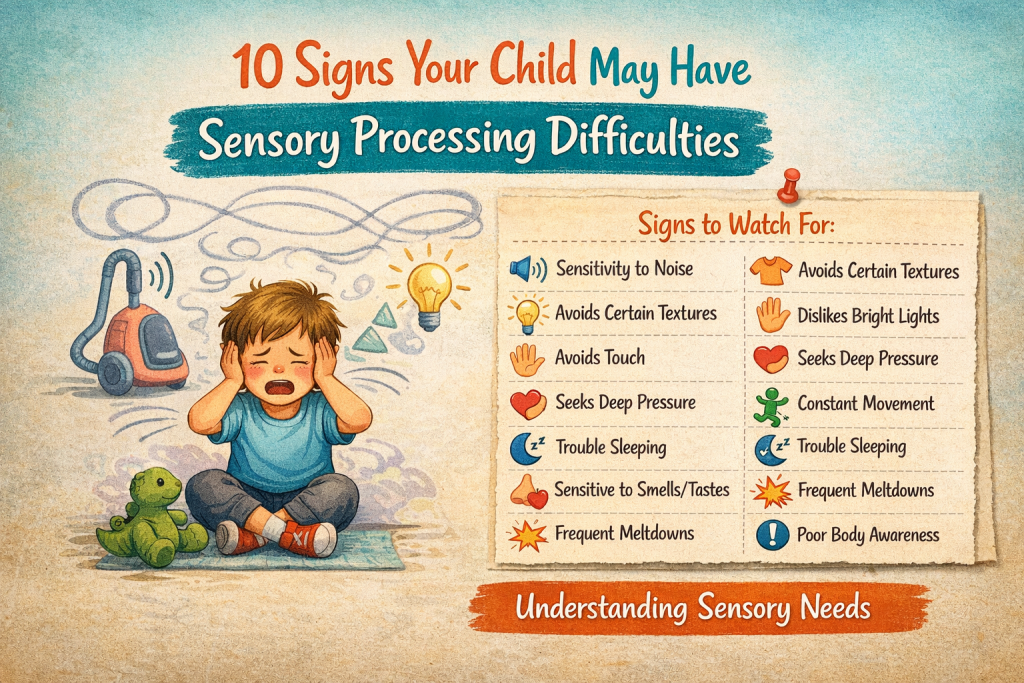
Every child experiences the world through their senses. Sight, sound, touch, taste, smell, movement and body awareness all help us understand what is happening around us.
For some children, however, sensory information can feel overwhelming, confusing or uncomfortable. This is often described as sensory processing difficulties, where the brain has trouble organising and responding to sensory input.
Children with sensory challenges may react more strongly to certain sensations, or sometimes seem to seek out extra sensory input.
Here are some common signs that a child may be experiencing sensory processing difficulties.
1. Sensitivity to Noise
Some children become easily overwhelmed by everyday sounds that others barely notice. Busy environments such as supermarkets, classrooms or playgrounds can feel extremely loud and stressful.
A child may cover their ears, become anxious, or want to leave noisy places quickly.
2. Discomfort With Certain Textures
Clothing labels, certain fabrics, or the feeling of messy hands can be very uncomfortable for some children. They may refuse to wear certain clothes, avoid messy play, or become distressed by small things such as wet sleeves or sticky fingers.
3. Strong Reactions to Lights or Busy Environments
Bright lights, crowded spaces, or lots of visual activity can feel overwhelming. Some children struggle in busy places where there are lots of people, movement and noise.
This can lead to stress, anxiety or meltdowns when the environment becomes too stimulating.
4. Avoiding Physical Touch
Some children find certain types of touch uncomfortable or even painful. Light touch in particular can feel irritating or overwhelming.
They may avoid hugs, dislike having their hair brushed, or pull away when touched unexpectedly.
5. Seeking Deep Pressure
While some children avoid touch, others actively seek strong pressure. They may enjoy tight hugs, wrapping themselves in blankets, squeezing into small spaces, or cuddling heavy objects.
Deep pressure can often help these children feel calmer and more regulated.
6. Constant Movement
Children who seek sensory input may struggle to sit still. They may constantly run, climb, jump, spin or fidget.
Movement helps them regulate their bodies and stay focused.
7. Difficulty Settling or Sleeping
Children with sensory processing difficulties can sometimes find it hard to relax at the end of the day. Their nervous system may still feel overstimulated, making bedtime routines challenging.
Calming sensory input and predictable routines can help support relaxation before sleep.
8. Strong Reactions to Smells or Tastes
Some children are extremely sensitive to smells or food textures. This can lead to very limited diets or refusal to try new foods.
Certain smells that others barely notice may feel overwhelming.
9. Frequent Meltdowns in Busy Environments
Busy places such as shops, parties, or crowded events can sometimes trigger meltdowns. This often happens because the child is experiencing sensory overload.
When too much sensory information builds up, it can become difficult for the brain to cope.
10. Difficulty With Body Awareness
Some children struggle with understanding where their body is in space. They may appear clumsy, bump into things, or use too much force when playing.
Activities that provide movement or deep pressure can sometimes help improve body awareness.
Understanding Your Child’s Sensory Needs
Every child is different. Some children are sensory sensitive, meaning certain sensations feel too intense. Others are sensory seeking, meaning they look for extra sensory input to help their body feel regulated. Some will be a combination of the two.
Recognising these differences can help parents better understand what their child needs in order to feel calm, comfortable and supported.
Supporting Sensory Regulation
Simple strategies such as predictable routines, quiet spaces, movement breaks and calming sensory tools can make a big difference for children who experience sensory processing difficulties.
At Sensory Hugs, we offer a range of sensory products designed to provide calming input and support relaxation. Many families find that tools providing gentle deep pressure or movement can help children feel more settled and secure.